
Monday, November 26, 2012

Kumon Learning
Kumon is a program that brings together students of different ages in a learning-assistance organization. Older students - typically in high school - serve as teachers and provide help to younger children with their homework and assignments, in an effort not only to further the development of the younger child, but to expose students of different age groups to each other. This is meant to reduce prejudices - or fears - that these students might normally have in interracting with each other on a more casual basis, such that a younger child might more willingly go up to an older one to ask for help, or even just to simply play.
I had a number of friends back in high school who were part of this program, and nearly every account I got from them was a positive one. Stories about how they were meeting great kids who really wanted to learn, or about how proud they felt once they'd helped these children through a difficult problem, were inspiring, and made the program, from what it sounded like to me, very worthwhile. A couple of them even told me about how they would get calls from individual students off-hours asking for help, which is something that I as a child, who had never participated in a program like this one, would never have done.
I had a number of friends back in high school who were part of this program, and nearly every account I got from them was a positive one. Stories about how they were meeting great kids who really wanted to learn, or about how proud they felt once they'd helped these children through a difficult problem, were inspiring, and made the program, from what it sounded like to me, very worthwhile. A couple of them even told me about how they would get calls from individual students off-hours asking for help, which is something that I as a child, who had never participated in a program like this one, would never have done.
Various Playground Designs


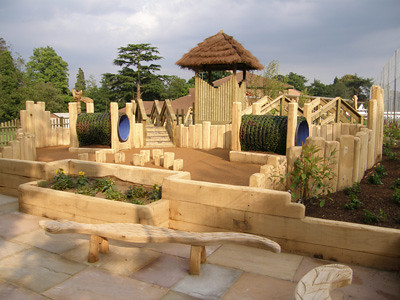
Each of these three playgrounds offer a unique and fun experience for children. The first has a sea atmosphere to it, which helps invoke children's imaginations. I personally always felt that the playground should be creative as a children's mind. Which leads us to the second choice! It has the typical little forts that a playground has, but with a twist; literally. (I apologize for that.) The distorted feel of the playground is a feature that helps children's imagination on making different games to play. And lastly, the final playground. This playground is based on nature, and has a ecological, green feeling to it. This is definitely one of the most interesting playgrounds I've seen so far.


The Bad
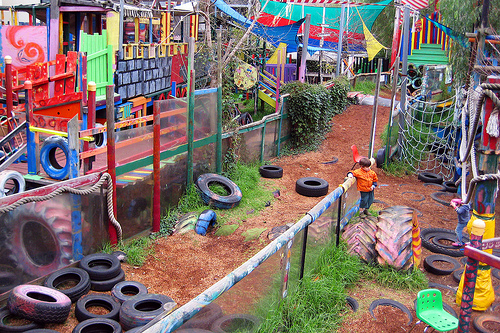
Now, these playgrounds are the absolute worst things I've ever seen. The first one looks like an absolute unsanitary mess, and completely unsafe. The second is actually a take on making a "green" playground again, but unlike the above one I talked about previously, this one does away with the creativity and just places bushes and rocks everywhere. And lastly, the final one looks just as unkept as the first. It also has a very boot camp feeling to it, and it looks like it's not exactly the most fun place to take your child.
Sunday, November 25, 2012
Best Buddies Program
Best Buddies is a non-profit organization that reduces prejudice by pairing volunteers with people with intellectual and developmental disabilities. This organization exists mainly in middle, high school and college settings. By placing an intellectually/developmentally disabled person with a volunteer, both sides are benefitted. The disabled will find a life-long friendship and a sense of importance that will help their lives move in a positive direction. This also gives the disabled a chance to familiarize themselves with aspects about living on their own and securing jobs as a contributing member of society. The organization benefits the volunteers by establishing intergroup contact that will help reduce prejudice towards the mentally handicapped.
I am familiar with Best Buddies, as there was a program in my high school. Although I was not involved, I saw its positive effects. The handicapped students were able to interact with people that they do not usually be with, and it helps them gain new perspectives and confidence. Gaining the approval of those who are not handicapped makes a big difference. The intergroup contact reduces prejudice, while also doing a giving the mentally handicapped one-on-one contact that will benefit their perspectives and give them a sense of belonging.
I am familiar with Best Buddies, as there was a program in my high school. Although I was not involved, I saw its positive effects. The handicapped students were able to interact with people that they do not usually be with, and it helps them gain new perspectives and confidence. Gaining the approval of those who are not handicapped makes a big difference. The intergroup contact reduces prejudice, while also doing a giving the mentally handicapped one-on-one contact that will benefit their perspectives and give them a sense of belonging.
the police athletic league
The Police Athletic League is a non-profit organization which runs afterschool and summer programs for kids in inner-city neighborhoods. Though it was started by a Police Commissioner in 1914, it's not really staffed by police anymore. In the beginning, there were only "playstreets," which are blocked-off streets where unsupervised kids can play in the summer, guarded by friendly police officers. Playstreets are still around. These work to reduce prejudice, because often inner-city residents are biased against cops because of negative experiences that they or people that they know have had with law enforcement. The friendly and protective presence of cops would have certainly made the kids playing at the playstreets have a more neutral to positive view of cops.
My father worked for the PAL for almost all of his adult life, starting as a camp counselor and moving up to the director of counseling for all the afterschool centers in NYC. He worked in Hell's Kitchen as a counselor in the seventies, when there was still a really bad gang problem there amongst the Irish residents. Many of my dad's campers were the younger siblings of gang members, and they didn't respect my dad (who was from Connecticut, and straight out of college). In order to get their respect, my dad decided to get as good as he could at pool, a game that all the kids apparently revered. He played at pool halls for months, and finally was able to show off his skills to the kids at the pool table at the PAL center. With this, he could connect with the kids. I think this is a good demonstration of the contact hypothesis, because when the kids realized that my dad had a skill that they wanted, and when they felt that he was relatable, they were more willing to give them the time of day, and their respect.
Mix it up at Lunch Day
Mixit up at Lunch Day is a non-profit program launched by Teaching Tolerance a
decade ago. This program, founded by southern poverty Law Center, aims to
reduce a variety of prejudices in School setting all across the country.
From their national survey, they found that outside classrooms, inside the school fences, cafeteria have been identified as the place where divisions are most clearly drawn. This program encourages students to take a new seat in the cafeteria at October 30. This one day, students can cross the lines of division, interact with new people outside their normal social circles.
Mix it up give direction to schools about how to arrange the sitting and what kind of discussion topic will ensure a comfortable conversation during the lunch. By doing so, it increased awareness about social boundaries and divisions within school, so students are able to identify, question and cross social boundaries. When students interact with those who are different from their previous perceptions, prejudice, biases and misperceptions can decrease.
From their national survey, they found that outside classrooms, inside the school fences, cafeteria have been identified as the place where divisions are most clearly drawn. This program encourages students to take a new seat in the cafeteria at October 30. This one day, students can cross the lines of division, interact with new people outside their normal social circles.
Mix it up give direction to schools about how to arrange the sitting and what kind of discussion topic will ensure a comfortable conversation during the lunch. By doing so, it increased awareness about social boundaries and divisions within school, so students are able to identify, question and cross social boundaries. When students interact with those who are different from their previous perceptions, prejudice, biases and misperceptions can decrease.
Wednesday, November 21, 2012
Reducing Prejudice- Big Brother Big Sister
One non-profit project that I find particularly successful in reducing a variety of prejudices is the Big Brother Big Sister Program. This program, started over 100 years ago, pairs children, ages 6-18, facing adversity with adult volunteers who guide these children, provide positive experiences and give these children someone to look up to. Although the pairings, themselves, are not necessarily arranged as a way of bringing two prejudice groups together, the adults and children involved in this program come from all backgrounds and walks of life and bond and interact so that the reduction of any preconceived prejudices between these two different people is made very possible. Although the program is ultimately intended to better the lives of the children, the adult also has the potential to gain and learn a lot from the Big/Little sibling relationship.
Here is a link to a page describing their mission, main goals, and their successes.
Here is a link to a page describing their mission, main goals, and their successes.
Subscribe to:
Posts (Atom)